Reverse Mortgage With an Existing Mortgage
It's Actually One of the Most Common Reasons People Apply

JP Dauber · Licensed HECM Specialist
NMLS# 386298 · Published May 6, 2026
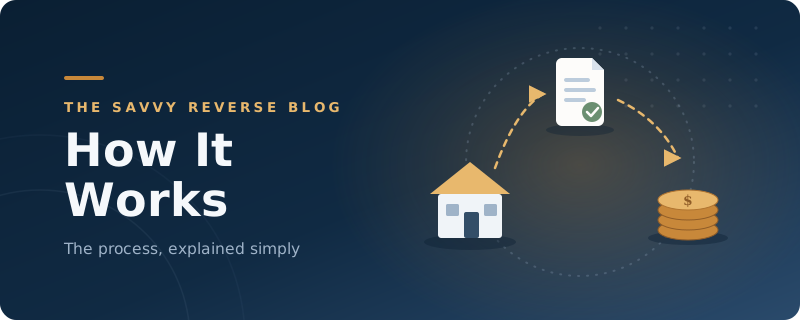
How does a HECM pay off your existing mortgage?
When you close on a HECM, the very first thing that happens is your existing mortgage gets paid off. This is a mandatory use of proceeds — the old loan must be satisfied before you can access any remaining funds.
Here's the sequence: the HECM lender pays off your current mortgage lender, the old lien is released, and the HECM lien takes its place. From that point forward, you have no monthly mortgage payment. The remaining equity (your total HECM proceeds minus the payoff amount) is yours to use however you want.
An example with numbers
Barbara, age 72 — still paying on her mortgage
Home value: $450,000
Remaining mortgage: $120,000 (paying $1,400/month)
HECM available at her age and current rates: ~$220,000
Mandatory payoff of existing mortgage: −$120,000
Remaining available: ~$100,000 (as line of credit, monthly payments, or lump sum)
Monthly payment eliminated: $1,400/month = $16,800/year
Illustrative example only. Actual amounts depend on age, home value, and current interest rates.
Barbara doesn't just get $100,000 in accessible funds — she also stops writing a $1,400 check every month. Over 10 years, that's $168,000 in payments she never has to make.
What if my mortgage balance is too high?
If your remaining mortgage balance is close to (or exceeds) the amount the HECM can provide, you have a few options:
Pay down the balance first
If you can reduce the balance before applying, more of the HECM proceeds will be available to you after payoff.
Bring cash to closing
If the HECM falls slightly short of your payoff amount, you can bring the difference in cash. This still eliminates your monthly payment.
Wait for more equity
If your home is appreciating, waiting a year or two may increase your HECM proceeds enough to cover the payoff with room to spare.
Just eliminate the payment
Even if the HECM only covers the payoff with nothing left over, you've still eliminated a monthly payment — which is the primary goal for many borrowers.
Your old mortgage goes away at closing
Having an existing mortgage doesn't disqualify you — it's actually the most common starting point. The HECM pays off your old loan at closing, eliminates your monthly payment, and whatever equity remains is yours to access. For retirees struggling with a monthly mortgage on a fixed income, this is often the single biggest financial relief a HECM provides.
Want to see how much you'd have left after paying off your mortgage? Try the calculator or reach out for a personalized breakdown.
Keep reading
The complete guide
Reverse Mortgage Eligibility →
Can You Rent Out Part of Your Home With a Reverse Mortgage? →
You can rent rooms or units — but you can't rent the whole house. Here's where the line is.
How the Reverse Mortgage Financial Assessment Works →
No minimum credit score, no debt-to-income ratio. Here's what lenders actually look at.
Reverse Mortgages for Veterans →
No VA-specific product, but veterans are fully eligible. VA income counts, and HECM funds don't affect benefits.
Reverse Mortgage After Bankruptcy: What You Need to Know →
Not a permanent disqualification. Chapter 7 requires 2 years, Chapter 13 may be sooner.