What Happens at a Reverse Mortgage Closing
Signing Day, Step by Step

JP Dauber · Licensed HECM Specialist
NMLS# 386298 · Published August 19, 2026
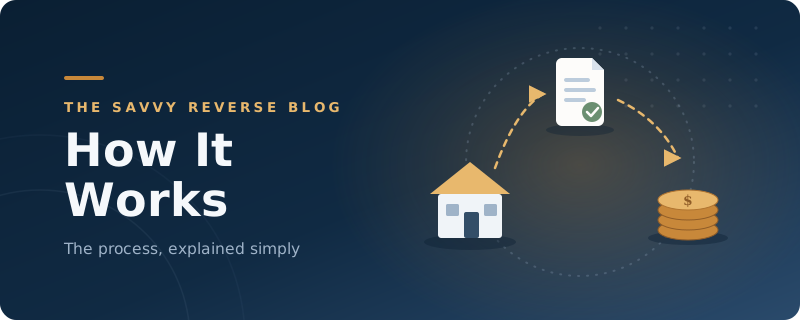
Before the signing
By closing day, the heavy lifting is done: counseling is complete, the appraisal is finished, and underwriting has approved the loan. Closing is mostly signatures.
You will receive a closing disclosure ahead of time showing your final numbers. Review it and ask questions before you sign anything.
The signing itself
A notary or closing agent meets you, often at your home or a title office, and walks through the documents. You will sign the note, the mortgage, and disclosures confirming the terms, costs, and your obligations.
Take your time. A good loan officer makes sure you understand each document rather than rushing you through a stack of pages.
Your 3-day right to cancel
After signing, federal law gives you a three-business-day right of rescission. During this window you can cancel the loan for any reason, with no penalty.
The loan does not fund until this period ends, which is a deliberate protection — a built-in pause to be sure you are comfortable.
Key fact
Your reverse mortgage does not fund until the three-business-day right of rescission passes. This cooling-off period lets you cancel for any reason with no cost — a final safeguard after you have signed.
Funding and getting your money
Once the rescission period ends, the loan funds. Any existing mortgage is paid off first, closing costs are settled, and your remaining proceeds are disbursed by your chosen method — lump sum, monthly payments, or a line of credit.
Lump-sum and first monthly funds typically arrive within a few business days of funding.
After closing
You will receive a packet with your final documents and your loan servicer's contact information. Keep it handy — that servicer handles your statements, any draws, and the annual occupancy certification.
Curious what your closing disclosure will look like? Reach out and I will walk you through a sample so there are no surprises.
Keep reading
The complete guide
How a Reverse Mortgage Works →
What Happens During HECM Counseling →
Every reverse mortgage requires independent HUD-approved counseling before you apply. Here's what the session covers, what it costs, and how to prepare.
Tenure vs. Term Payments: Choosing Your Monthly Option →
Tenure pays you for life but smaller; term pays more but stops. Here's how to choose between the two monthly reverse mortgage payment plans.
The 5 Ways to Receive Your Reverse Mortgage Money →
Lump sum, monthly tenure, monthly term, line of credit, or a mix. The five HECM payout options explained — and how to pick the one that fits your goal.
Documents Needed for a Reverse Mortgage Application →
Less paperwork than a traditional mortgage. Here's exactly what you'll need.